

Activation Threshold Event
Following the Activation Threshold Event earlier in 2025, the Greenland Project formally entered a phase no longer defined by scientific observation alone.
The structure’s status required a broader framework: political, territorial, and historical.
The project could no longer be treated as a research initiative.
It had become a civilizational responsibility.
Date: March 4, 2025
Status: Public Summary Cleared
Archive Source: Greenland Project Threshold Review
Summary
On March 4, 2025, the Greenland Containment Structure exhibited the first complete internal phase alignment recorded since monitoring began.
No external stimulus was introduced.
No personnel were present at the site.
The structure reached the threshold state independently.
Event Description
Sensors recorded:
Full harmonic synchronization across the inner ring
Uniform electromagnetic stabilization along the surface geometry
A temporary loss of background environmental interference
A measurable reduction in local atmospheric entropy
For the first time, the structure was no longer behaving as a passive system.
It was behaving as a prepared system.
Visual Observation
High-resolution optical instruments recorded a brief internal light diffusion within the aperture.
The diffusion did not resemble energy discharge.
It resembled field formation.
No sustained emission occurred.
The event duration was 11.2 seconds.
Immediate Classification
The event was initially logged as:
Structural phase stabilization.
Within hours, the classification was revised to:
Activation threshold achieved.
No reference to activation was permitted in public-facing material.
Project Interpretation
The review board agreed unanimously:
The structure had not been activated.
The structure had completed its own readiness sequence.
Human participation was no longer required for continuation.
The system was no longer waiting.
It was simply allowing.
Administrative Directive
Project leadership issued a single standing order:
“No further attempts to interfere.
Observation only.”
The directive included a margin annotation:
“We are no longer responsible for what it is.
Only for how we respond to it.”
Strategic Conclusion
The 2025 threshold report closes with:
“History will record this not as the moment it opened,
but as the moment we understood that it never needed us to.”
Closing Note
The final line of the file reads:
“The structure has completed preparation.
The question is not whether it will open.
The question is whether we will recognize when it does.”
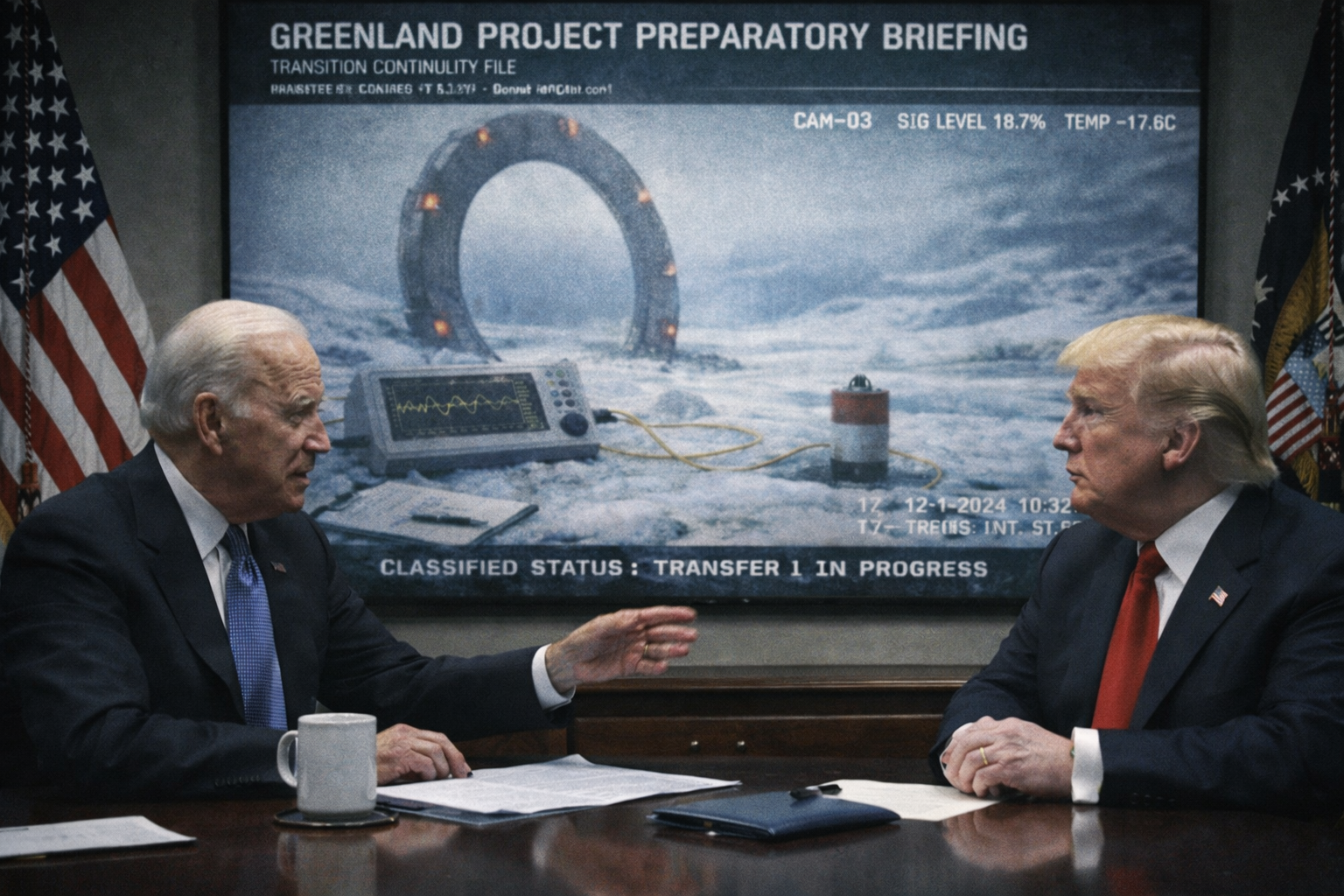
Transition Continuity Brief - Greenland Site
In late 2024, the Greenland Project initiated formal continuity procedures to ensure uninterrupted oversight of the Containment Structure across the upcoming presidential transition.
The outgoing administration authorized a full archival transfer package for the next executive authority, regardless of electoral outcome.
Date: December 11, 2024
Status: Public Summary Cleared
Archive Source: Greenland Project Transition Review Board
Summary
In late 2024, the Greenland Project initiated formal continuity procedures to ensure uninterrupted oversight of the Containment Structure across the upcoming presidential transition.
The outgoing administration authorized a full archival transfer package for the next executive authority, regardless of electoral outcome.
Executive Briefing Process
Under direction of the sitting administration, all Greenland Project materials were reorganized into a condensed executive continuity file set, including:
Historical anomaly records
Multinational coordination summaries
Sensor convergence analyses
Unauthorized response event documentation
Long-term risk modeling projections
The briefing materials emphasized that the structure remained unactivated, stable, and strategically unresolved.
Strategic Assessment
The 2024 continuity file concluded:
“The Greenland Containment Structure represents a permanent strategic variable within Arctic security planning. Its significance extends beyond scientific classification.”
This phrasing was selected to ensure the project would remain relevant under any future political framework.
Policy Context
Internal notes referenced renewed geopolitical discussion regarding Greenland’s strategic importance, including:
Arctic transit control
Northern defense infrastructure
Long-term territorial influence
Analysts observed that public debate regarding Greenland’s status periodically resurfaced in U.S. political discourse, often framed in economic or security terms.
The project formally advised:
“Future administrations may view Greenland less as territory and more as necessity.”
Transition Annotation
One internal memo added a line later redacted from the public file:
“The next administration will not inherit a discovery.
It will inherit a decision.”
Administrative Outcome
The Greenland Project was reclassified as:
A permanent strategic research obligation, independent of administration.
This ensured that the structure’s oversight would continue without interruption regardless of leadership change.
Closing Note
The final sentence of the 2024 continuity brief reads:
“The structure will outlast politics.
The question is whether politics will outlast the structure.”
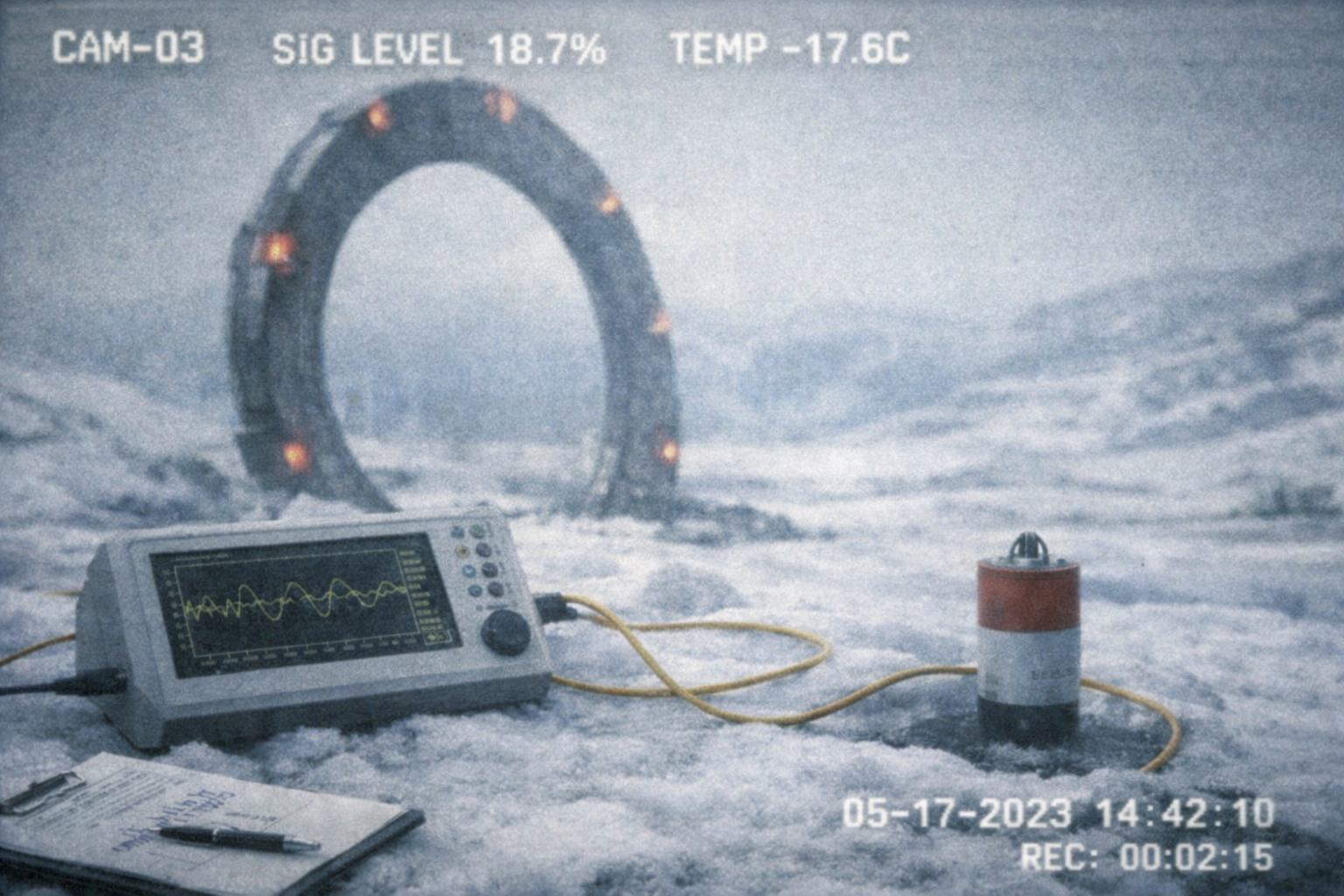
Controlled Stimulus Test Authorization
In mid-2022, long-term environmental sensors surrounding the Greenland Containment Structure recorded a pattern that could not be attributed to atmospheric, seismic, or magnetic variation.
The readings did not indicate activity.
They indicated alignment.
Date: May 17, 2023
Status: Public Summary Cleared
Archive Source: Greenland Project Experimental Review Board
Summary
In early 2023, project leadership approved the first controlled environmental stimulus test conducted within the monitored perimeter of the Greenland Containment Structure.
The test did not involve physical contact with the structure.
It involved sound.
Test Parameters
A low-intensity harmonic signal, derived from naturally occurring Arctic resonance frequencies, was introduced into the surrounding ice strata using standard seismic calibration equipment.
The signal:
Matched naturally observed environmental harmonics
Remained below all disturbance thresholds
Was classified as non-invasive
The test was designed to confirm whether the 2022 resonance patterns were coincidental or responsive.
Observed Outcome
Within seconds of signal introduction, sensors recorded:
A measurable stabilization of prior harmonic drift
A reduction in background electromagnetic noise
A phase alignment across all monitoring instruments
No increase in energy output was detected.
No mechanical motion was observed.
However, the resonance pattern shifted.
Interpretation
The shift did not resemble amplification.
It resembled acknowledgment.
Project analysts carefully avoided that term in formal documentation.
The official classification was:
Passive harmonic accommodation.
Administrative Response
The stimulus test was not repeated.
Project leadership concluded that further interaction risked transforming observation into participation.
A moratorium was placed on additional stimulus testing pending long-term review.
Strategic Conclusion
The 2023 report summarized the event as follows:
“The structure did not react.
It adjusted.”
Closing Note
A handwritten margin note on the final page reads:
“We finally spoke.
It did not answer.
It simply remembered the language.”

Environmental Resonance Irregularity
In mid-2022, long-term environmental sensors surrounding the Greenland Containment Structure recorded a pattern that could not be attributed to atmospheric, seismic, or magnetic variation.
The readings did not indicate activity.
They indicated alignment.
Date: September 8, 2022
Status: Public Summary Cleared
Archive Source: Greenland Project Sensor Review
Summary
In mid-2022, long-term environmental sensors surrounding the Greenland Containment Structure recorded a pattern that could not be attributed to atmospheric, seismic, or magnetic variation.
The readings did not indicate activity.
They indicated alignment.
Observation Details
Data collected over a twelve-month period revealed:
Repeating harmonic fluctuations in localized electromagnetic fields
Micro-variations in gravitational density within a fixed radius
Temperature stabilization inconsistent with surrounding ice layers
These patterns occurred without any mechanical or geological trigger.
They were also mathematically consistent.
Initial Interpretation
Analysts initially classified the phenomenon as:
Environmental resonance convergence.
This phrasing was chosen to avoid speculative interpretation.
However, internal notes describe the pattern as:
“Behaving as if responding to an external reference.”
No such reference was identified.
Project Response
No physical interaction was authorized.
Instead, the project approved:
Expanded harmonic monitoring
Cross-comparison with global resonance databases
Passive signal modeling only
The structure itself remained untouched.
Strategic Conclusion
By late 2022, project leadership formally concluded:
The structure is not inactive.
It is synchronized.
This conclusion was not shared externally.
Closing Note
The final annotation in the 2022 report reads:
“We are no longer observing silence.
We are observing restraint.”
This keeps everything realistic, scientific, restrained, and ominous — still no portal, still no activation, just the first hint that the structure is aware of something.

Elevated Strategic Review: Greenland 2021
In 2021, the Greenland Project entered a critical phase of strategic realignment following renewed international focus on Arctic geopolitical priorities. Signs of warming trends, new shipping corridors, and rare-earth mineral assessments renewed interest in the region from both defense and economic policy planners.
These developments coincided with a revival of public debate in political circles over Greenland’s role in global security frameworks.
Date: June 14, 2021
Status: Public Summary Cleared
Archive Source: Interagency Arctic Strategy Report
Summary
By late 2019, the Greenland Containment Structure could no longer be treated as a single-nation anomaly.
Although its location remained within Greenlandic territory, the scope of its historical and technical implications prompted quiet consultation with allied research and defense partners.
No public announcement was made.
Allied Awareness
Limited briefings were issued to:
Select NATO scientific committees
Arctic research coordination groups
Multinational geological monitoring programs
The structure was described only as a persistent Arctic geophysical irregularity with long-term strategic relevance.
No mention of non-terrestrial origin was included in these briefings.
Data Standardization
To prevent future fragmentation of records, all participating organizations were instructed to adopt:
A single coordinate reference system
A shared anomaly classification format
A unified terminology for the structure
This marked the first time the structure was treated as a shared historical constant rather than a regional curiosity.
Risk Assessment
Joint analysts concluded:
The structure poses no immediate threat
The structure cannot be classified as inactive
The structure shows long-term environmental stability
The structure exhibits properties inconsistent with natural geological formation
The final conclusion was intentionally restrained:
“The structure is stable, persistent, and unexplained.”
Administrative Outcome
The Greenland Project was formally elevated from a national research initiative to a multinational observational program, though its leadership remained centralized.
No excavation authority was granted.
No activation testing was approved.
Observation only.
Closing Note
The Admiral’s marginal note on the coordination file reads:
“Once multiple nations agree not to speak about something, it becomes real.”

International Coordination Notice
By late 2019, the Greenland Containment Structure could no longer be treated as a single-nation anomaly.
Although its location remained within Greenlandic territory, the scope of its historical and technical implications prompted quiet consultation with allied research and defense partners.
No public announcement was made.
Date: November 19, 2019
Status: Public Summary Cleared
Archive Source: Greenland Project Oversight Council
Summary
By late 2019, the Greenland Containment Structure could no longer be treated as a single-nation anomaly.
Although its location remained within Greenlandic territory, the scope of its historical and technical implications prompted quiet consultation with allied research and defense partners.
No public announcement was made.
Allied Awareness
Limited briefings were issued to:
Select NATO scientific committees
Arctic research coordination groups
Multinational geological monitoring programs
The structure was described only as a persistent Arctic geophysical irregularity with long-term strategic relevance.
No mention of non-terrestrial origin was included in these briefings.
Data Standardization
To prevent future fragmentation of records, all participating organizations were instructed to adopt:
A single coordinate reference system
A shared anomaly classification format
A unified terminology for the structure
This marked the first time the structure was treated as a shared historical constant rather than a regional curiosity.
Risk Assessment
Joint analysts concluded:
The structure poses no immediate threat
The structure cannot be classified as inactive
The structure shows long-term environmental stability
The structure exhibits properties inconsistent with natural geological formation
The final conclusion was intentionally restrained:
“The structure is stable, persistent, and unexplained.”
Administrative Outcome
The Greenland Project was formally elevated from a national research initiative to a multinational observational program, though its leadership remained centralized.
No excavation authority was granted.
No activation testing was approved.
Observation only.
Closing Note
The Admiral’s marginal note on the coordination file reads:
“Once multiple nations agree not to speak about something, it becomes real.”
Record Consolidation Directive
It All Begins Here
Date: August 3, 2018
Status: Public Summary Cleared
Archive Source: Greenland Project Internal Review
Summary
Following the formal recognition of the Greenland Containment Structure in early 2017, the primary objective of the program shifted from discovery to record reconciliation.
The structure itself remained untouched.
The priority was understanding how long it had already been known.
Archive Integration
Between late 2017 and mid-2018, classified and semi-classified records from multiple agencies were cross-referenced for the first time under a unified index.
These included:
Naval Arctic patrol archives
Air Force satellite anomaly reports
Geological survey irregularity logs
NATO sensor calibration discrepancies
Civilian academic field notes recovered from closed expeditions
None of these sources identified the structure directly.
All of them described the same geographic coordinates.
Pattern Recognition
When layered chronologically, the records revealed a repeating cycle:
Detection
Dismissal
Reclassification
Loss of reference
The structure had never been erased.
It had simply been renamed repeatedly.
Strategic Conclusion
By August 2018, project leadership formally concluded:
The Greenland structure has been independently rediscovered at least twelve times since 1900.
Each rediscovery was treated as a new anomaly.
None were linked.
Administrative Directive
A consolidation order was issued to:
Prevent future renaming of the site
Standardize all references under a single designation
Classify the structure as a standing strategic anomaly
Prohibit physical interference pending historical analysis
The structure was officially listed as:
Greenland Containment Structure — Primary Node
Closing Note
The Admiral’s closing comment on the directive reads:
“We are not studying a mystery.
We are studying our own inability to remember.”
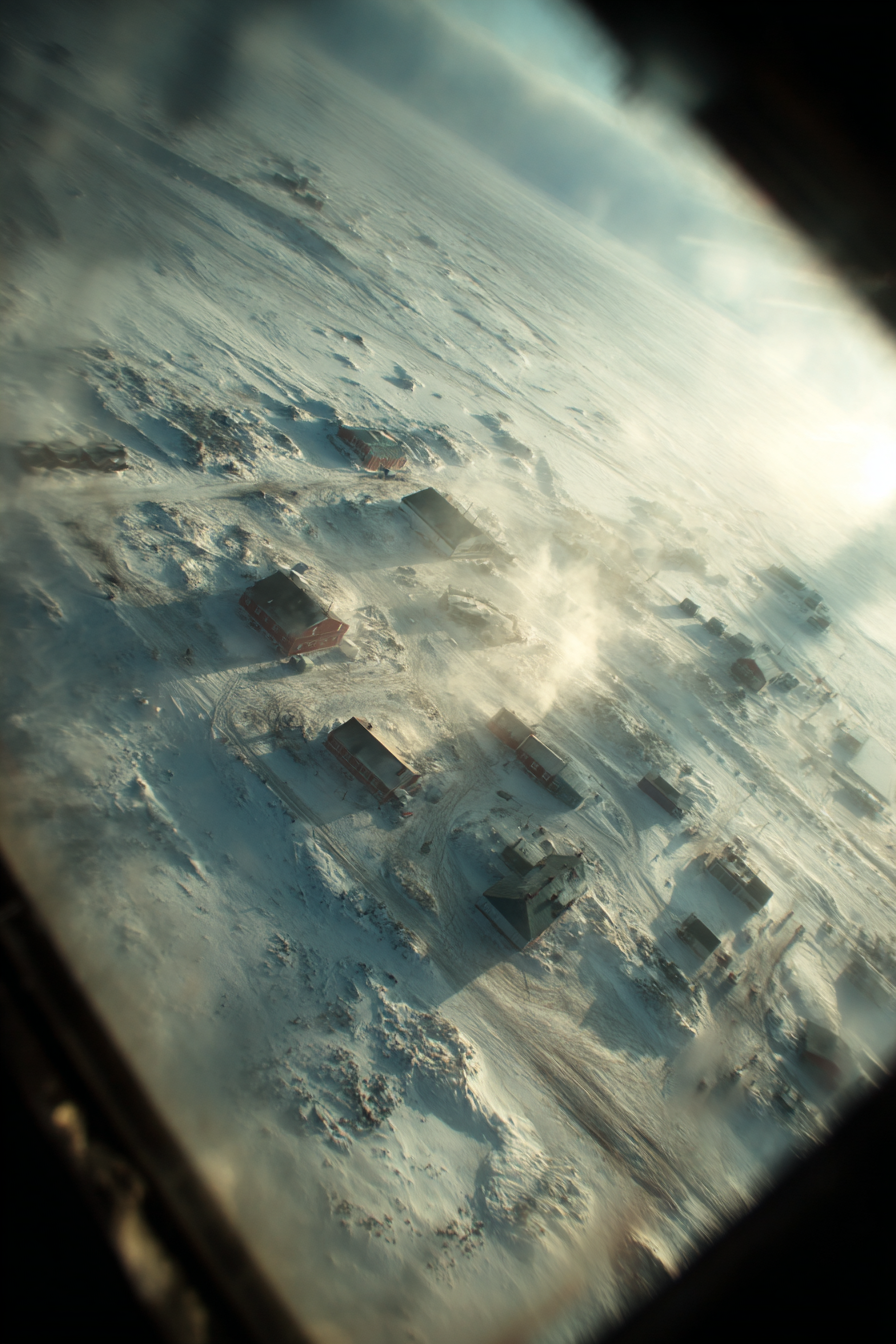
First Contact Record - Kalaallit Anomaly Site
The Greenland structure was not discovered in 2017.
It was recognized.
Long before formal authorization, fragments of its existence appeared across scattered military, scientific, and archaeological records dating back more than a century. These records were stored separately, mislabeled, or intentionally buried within unrelated research programs.
No single archive contained the full picture.
Date of Classification: January 14, 2017
Record Status: Declassified Summary
Origin File: Arctic Anomaly Archive / Naval Strategic Review
Summary
The Greenland structure was not discovered in 2017.
It was recognized.
Long before formal authorization, fragments of its existence appeared across scattered military, scientific, and archaeological records dating back more than a century. These records were stored separately, mislabeled, or intentionally buried within unrelated research programs.
No single archive contained the full picture.
Pre-Existing Evidence
Prior to 2017, references to the structure were located in:
Abandoned radar calibration logs from Arctic early-warning stations
Naval ice-shelf sonar surveys marked as geological errors
Cold War era gravity distortion reports filed under equipment malfunction
Archaeological field notes recovered from closed university expeditions
Several of these records originated from bases already operating in northern Greenland, though none acknowledged a common subject.
Each described a circular formation, impossible depth readings, and electromagnetic behavior inconsistent with any known natural structure.
The reports were dismissed individually.
Together, they formed a pattern.
The Admiral’s Proposal
In late 2016, a newly promoted U.S. Navy Admiral was assigned to review unresolved Arctic anomalies as part of a routine strategic modernization audit.
According to internal notes, the Admiral reached a single conclusion:
“This is not an error. This is an inheritance.”
Rather than proposing a new discovery mission, the Admiral proposed a reconciliation of existing records — arguing that humanity had not failed to find the structure, but had failed to remember it.
His proposal described the object not as an artifact, but as a system.
Authorization
The proposal was presented in early 2017.
It was approved within forty-eight hours.
The project was not announced publicly.
The promotion that followed was.
Initial Site Confirmation
Once clearance was granted, personnel were permitted to compare restricted archives across Arctic installations. When combined, the records confirmed:
The structure had been logged multiple times under different designations
Each base had independently recorded anomalous readings within the same coordinates
No excavation team had ever reached the full depth of the formation
The surrounding ice showed signs of long-term stabilization inconsistent with natural geology
The conclusion was unavoidable:
The structure had been present during every modern Arctic occupation.
It had simply never been acknowledged as singular.